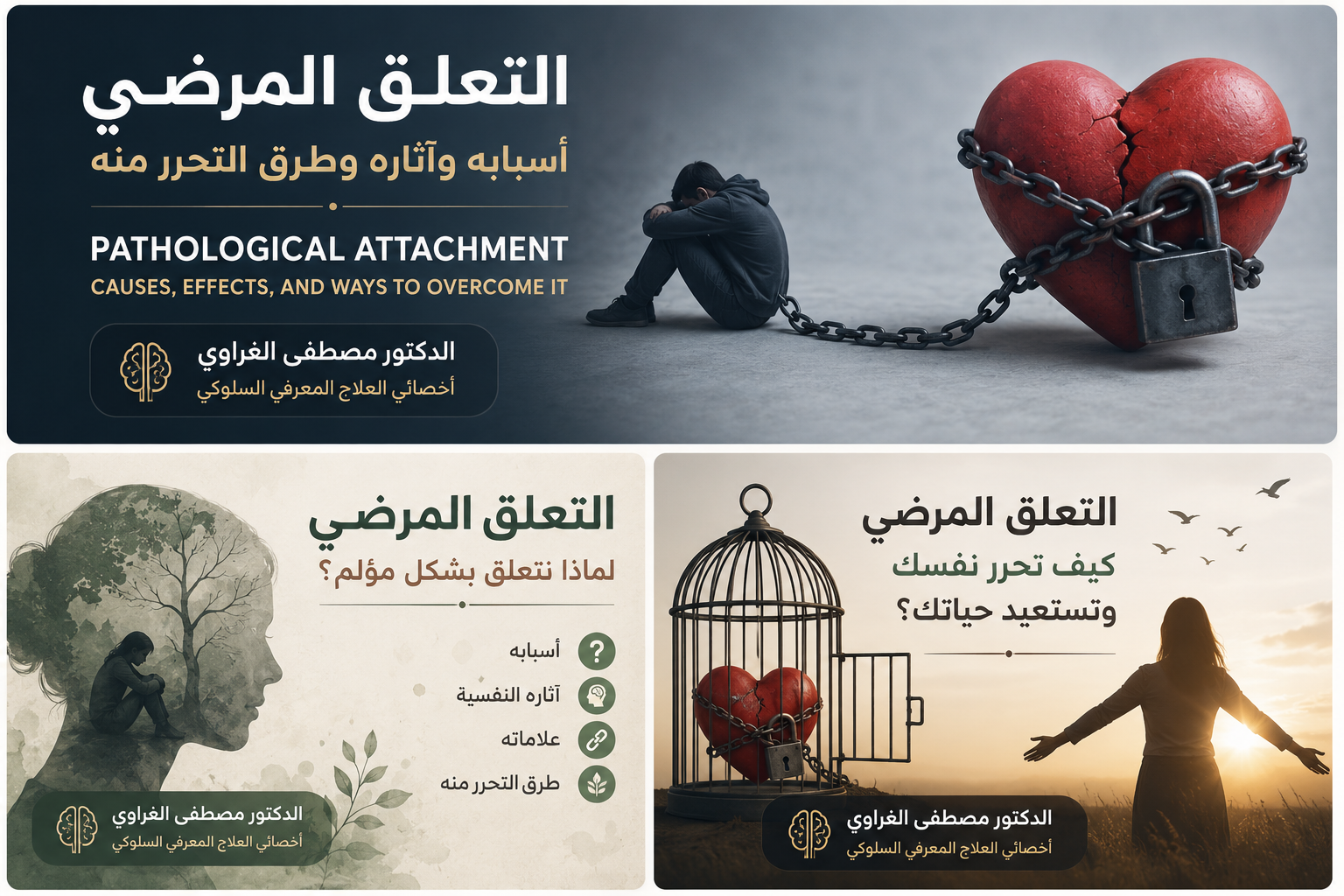
Pathological Attachment: Causes, Effects, and Ways to Overcome It
By Dr. Mustafa Al-Gharawi
Cognitive Behavioral Therapy (CBT) Specialist
Pathological attachment is an unhealthy emotional dependence in which an individual becomes psychologically reliant on another person, to the extent that their happiness and emotional stability depend on that person's presence. It is often accompanied by an intense fear of rejection, abandonment, or loss, which can negatively affect one's life and relationships.
Main Causes
- Emotional deprivation during childhood.
- Low self-esteem.
- Fear of loneliness or abandonment.
- Painful emotional experiences, such as betrayal or rejection.
- Psychological dependence on others to meet emotional needs.
Psychological Effects
- Persistent anxiety and emotional distress.
- Excessive preoccupation with the other person.
- Low self-confidence.
- Neglect of work, studies, and social relationships.
- Increased likelihood of entering and remaining in toxic relationships.
How Can We Overcome Pathological Attachment?
- Acknowledge the problem.
- Gradually reduce emotional dependence on the other person.
- Strengthen self-esteem and practice self-care.
- Engage in hobbies and expand healthy social relationships.
- Challenge and restructure negative thoughts using Cognitive Behavioral Therapy (CBT) techniques.
- Seek professional psychological support when necessary.
Conclusion
Healthy love provides security, mutual respect, and personal freedom, whereas pathological attachment deprives individuals of their independence and keeps them trapped in fear and emotional dependence. Recovery begins when a person realizes that their worth does not depend on another person's presence, but rather on self-respect, emotional resilience, and building a balanced, meaningful life.