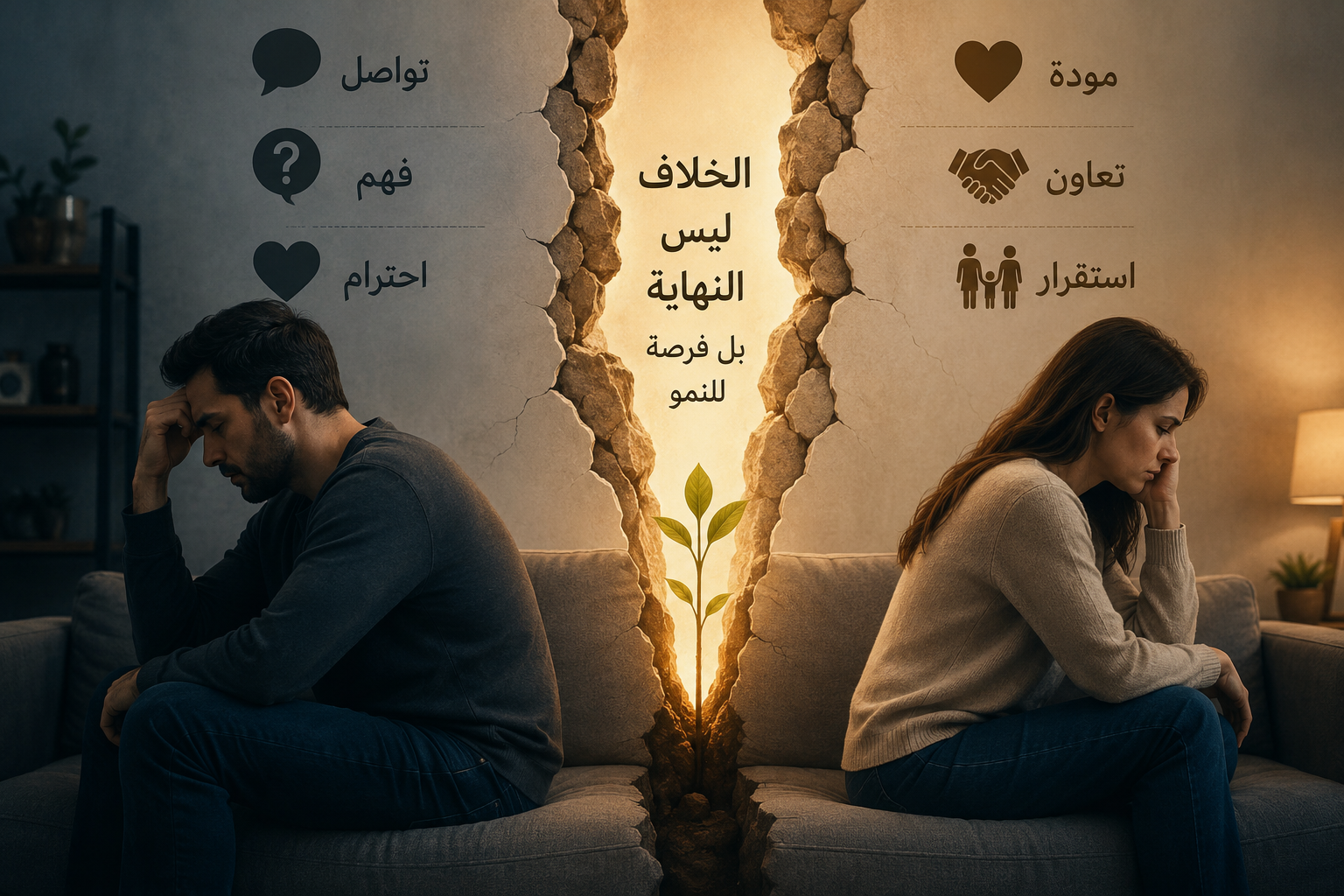
Marital Problems: Not the End of a Relationship, but the Beginning of Deeper Understanding B
By Dr. Mustafa Al-Gharawi
Cognitive Behavioral Therapy (CBT) Specialist
No marriage is free from conflict. Differences between spouses are a natural part of any relationship. The real issue is not the existence of disagreements, but how they are managed. Many relationships do not end because of one major problem; rather, they deteriorate due to the accumulation of small, unresolved issues.
Often, one spouse believes that winning an argument is a victory. In reality, the true victory lies in preserving the relationship.
Why Do Marital Problems Recur?
Marital conflicts commonly arise from:
- Poor communication and ineffective dialogue.
- Misunderstandings and making assumptions.
- Accumulated resentment without honest discussion.
- Comparing one's relationship to others.
- Financial or work-related pressures.
- Emotional neglect and lack of attention.
- Interference from others in the couple's private life.
Mistakes That Escalate Conflict
Certain behaviors intensify even the simplest disagreements, including:
- Raising one's voice or shouting.
- Threatening divorce during every disagreement.
- Bringing up past mistakes repeatedly.
- Mocking or belittling one's spouse.
- Using silent treatment or prolonged emotional withdrawal.
- Focusing on proving who is right instead of resolving the issue.
These behaviors do not solve problems; instead, they leave emotional wounds that may last for years.
How to Handle Marital Conflicts Effectively
1. Separate the Person from the Problem
Do not turn a disagreement into a personal attack. Address the behavior, not your spouse's character.
2. Choose the Right Time
Not every moment is appropriate for a serious discussion. Avoid difficult conversations when either partner is angry, exhausted, or in front of the children.
3. Listen Before You Speak
Listening is not simply waiting for your turn to talk; it is making a genuine effort to understand your partner's feelings and perspective.
4. Use Calm and Respectful Language
Instead of saying:
"You never care about me."
Say:
"I feel hurt when I don't receive the attention I need from you."
This approach reduces defensiveness and encourages constructive dialogue.
5. Focus on Solutions
Rather than asking,
"Who is to blame?"
Ask,
"How can we prevent this problem from happening again?"
6. Apologize When You Are Wrong
An apology does not diminish your dignity. On the contrary, it reflects emotional maturity, responsibility, and respect.
7. Never Neglect Small Acts of Affection
A kind word, a thoughtful message, a sincere smile, or a warm embrace can ease tensions that have lasted for days.
When Should You Seek Professional Help?
If conflicts become frequent, communication breaks down, emotional or verbal abuse becomes persistent, or either spouse begins to lose hope in the relationship, seeking support from a qualified marriage counselor or family therapist is a wise step before the situation worsens.
A Final Message
Marriage is not a relationship between two perfect people. It is a partnership between two individuals who continue learning how to love, how to disagree respectfully, and how to reconnect after every conflict.
Successful marriages are not those without problems; they are those in which couples know how to transform challenges into opportunities for growth, stronger trust, and deeper affection.
Always remember:
In marriage, do not ask, "Who won the argument?"
Instead, ask, "Has our relationship become stronger because of it?